ISTD Project : Milestones
For this project, I’m responding to the 2025 ISTD Student Assessment Scheme brief, which celebrates 50 years of the Society's educational initiatives. The theme revolves around the concept of milestones both literal and metaphorical, as markers of progress, transformation, and meaning across time. My task is to choose a person, topic, or subject that represents a key milestone or a series of connected milestones and explore their timeline in depth. The focus can be political, cultural, social, environmental, or personal, and I’m encouraged to highlight overlooked or unconventional narratives.
I need to define a clear context and audience, and develop a solid strategy that informs the design and typographic direction of the final outcome. The work should demonstrate strong research, visual exploration, and conceptual depth presented in an engaging format that best speaks to my chosen audience. The final submission includes a comprehensive document with my strategy, research, development, grids/specifications, and final design outcomes along with a written rationale of at least 500 words that reflects my approach to content hierarchy and typographic clarity.
My Concept : South African Students pioneering Social Change
For my ISTD Milestones project, I chose to focus on a powerful and ongoing force in our country's history: South African student activism. From the Soweto Uprising in 1976 to the #FeesMustFall movement in recent years, young people have consistently been at the forefront of challenging injustice and demanding change. South African students have never simply accepted the status quo, they’ve disrupted it. Whether fighting against apartheid, unaffordable education, or institutional inequality, these movements have not just protested; they’ve shifted the course of history.
This milestone matters because it’s not just a moment, it’s a legacy. Student activism is a recurring and transformative thread in South Africa’s timeline, proving that youth voices are not only powerful but necessary. It aligns perfectly with the ISTD brief because it highlights how moments of disruption can become turning points, how one generation’s courage can shape the future, and how typography and design can be used to preserve and amplify those voices.
My concept aims to honor the spirit of resistance, the bravery of collective youth action, and the milestones that emerged when students decided enough was enough. It’s about spotlighting the impact of activism, past and present, and showing that when students speak, history listens.

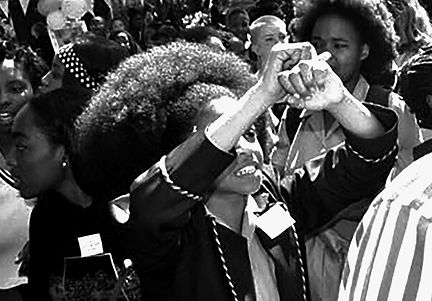


Process work : research
Timeline of Student Activism in South Africa (1976–Present)
1976 – Soweto Uprising: High school students protest against Bantu Education and Afrikaans instruction, sparking a brutal police crackdown and global anti-apartheid solidarity.
1980s – Anti-Apartheid University Protests: University students organize boycotts, sit-ins, and demonstrations to resist apartheid policies and demand equal education.
1994 – Post-Apartheid Education Struggles: Students push for a decolonized and accessible education system, highlighting ongoing racial and economic disparities.
2015 – #RhodesMustFall: UCT students demand the removal of Cecil Rhodes’ statue, igniting national debates on colonialism, institutional racism, and curriculum reform.
2015 – #FeesMustFall: Students protest against tuition hikes, financial exclusion, and police brutality, calling for free and decolonized education across SA.
2016 – Zulaikha Patel & #StopRacismAtPretoriaGirlsHigh: 13-year-old Zulaikha Patel leads protests against discriminatory hair policies in schools, exposing institutional racism in education.
2019 – #AmINext & Anti-GBV Protests: Following the murder of Uyinene Mrwetyana, students demand government action against gender-based violence on campuses.
2021–Present – Ongoing Student Activism: Students continue to fight for free education, NSFAS funding, campus safety, and mental health support, proving the movement is far from over.
Process work : IDEATIon
Scrapbook-Style Protest Notebook – I want to create a mixed-media, journal-like book that feels like a student's protest diary, filled with handwritten notes, newspaper clippings, protest visuals, and personal reflections.
Typographic Poster Series – I want to design a set of bold, protest-inspired posters using real student quotes, chants, and slogans, visually capturing the energy of activism.
Infographic Timeline – a structured visual timeline mapping out key milestones of South African student activism, showing the progression of student-led movements over time.
AI Component – I want to expand the project into an AI video piece, bringing the protest poetry, student voices, and activism to life in a dynamic way.
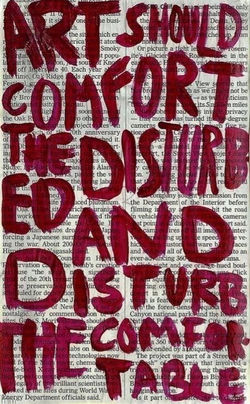
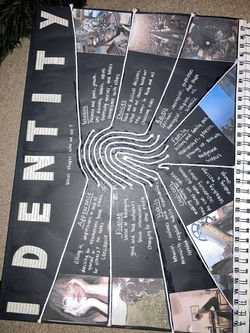
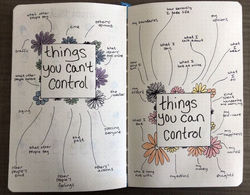
Process work : moodboard
 |  |  |
|---|---|---|
 |  |  |
 |  |  |
 |  |  |
 |  |  |
 |  |  |
Process work : Execution
Personal Journal of a Student Activist
Breakdown : Page by page
Page 1 : Introduction - A page that is dedicated to introducing the activist who owns the journal. Something along the lines of (If found , please return to...)
Page 2 & 3 : Honouring Past Leaders - this dps is dedicated to all the leaders who came before the owner of the journal. this is where the owner draws their strength and reminds themselves of the struggles which have been overcome.
Page 4 & 5 : What are we fighting for - this serves as a reminder of the battles that the students are currently facing and waging war against.
Page 6 : Why I fight - the owner jots down a heartfelt message as to why they fight so hard as an activist and what this struggle means to them.
Page 7 & 8 : Headlines - these pages are filled with a collage of newspaper clippings & headlines of student activism articles.
Page 9 : Protest Meeting Minutes - taking notes from a meeting regarding the next protest. delegating tasks & creating a plan of action.
Page 10 : Letter - this is a letter to the owners future self/future activists who might find this journal. it is a reminder that what they are doing is important and that they are fighting for a worthy cause.
Page 11 : Quotes - this page is full of quotes and motivation from past leaders and current activists to encourage one to never give up the good fight.
Page 12 & 13 : Passing notes - just a conversation between the owner and another activist which took place during a meeting.
Page 14 & 15 : Speech - the owner was tasked with giving a speech and wrote their draft in their journal with annotations to fix their mistakes.
Page 16 & 17 : Amagwijo - the lyrics to struggle songs and chants
Page 18 & 19 : Interview with an activist - This is a transcribed interview between the owner and another activist perhaps from another institution.
Page 20 & 21 : Brain dump - just pages full of the owners thoughts. maybe they were feeling overwhelmed and just decided to scream on paper.
Page 22 : Final Message - Maybe a conclusion to how this particular protest ended and a summary of how the institution handled it etc.
Page 23 : A symbol - a collage fist to show that the fight is not over.
Page 24 & 25 : Call to action - something to think about and act on for the next cause that requires action.
Execution : Mockups


